



Team
3 members

Timeline
1 month

Country
Israel

Industry
Music
About Project
Who Was the Client?
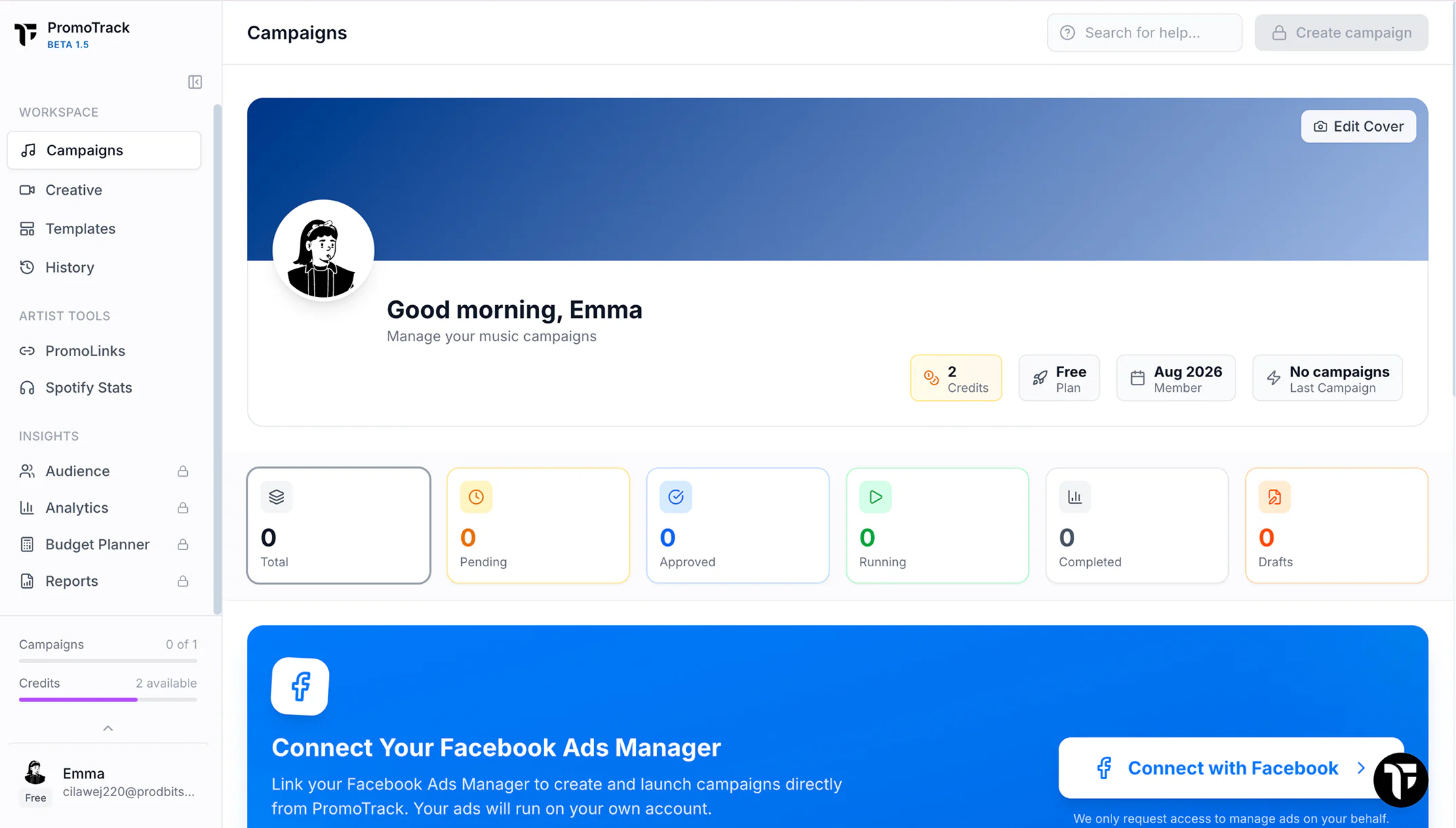
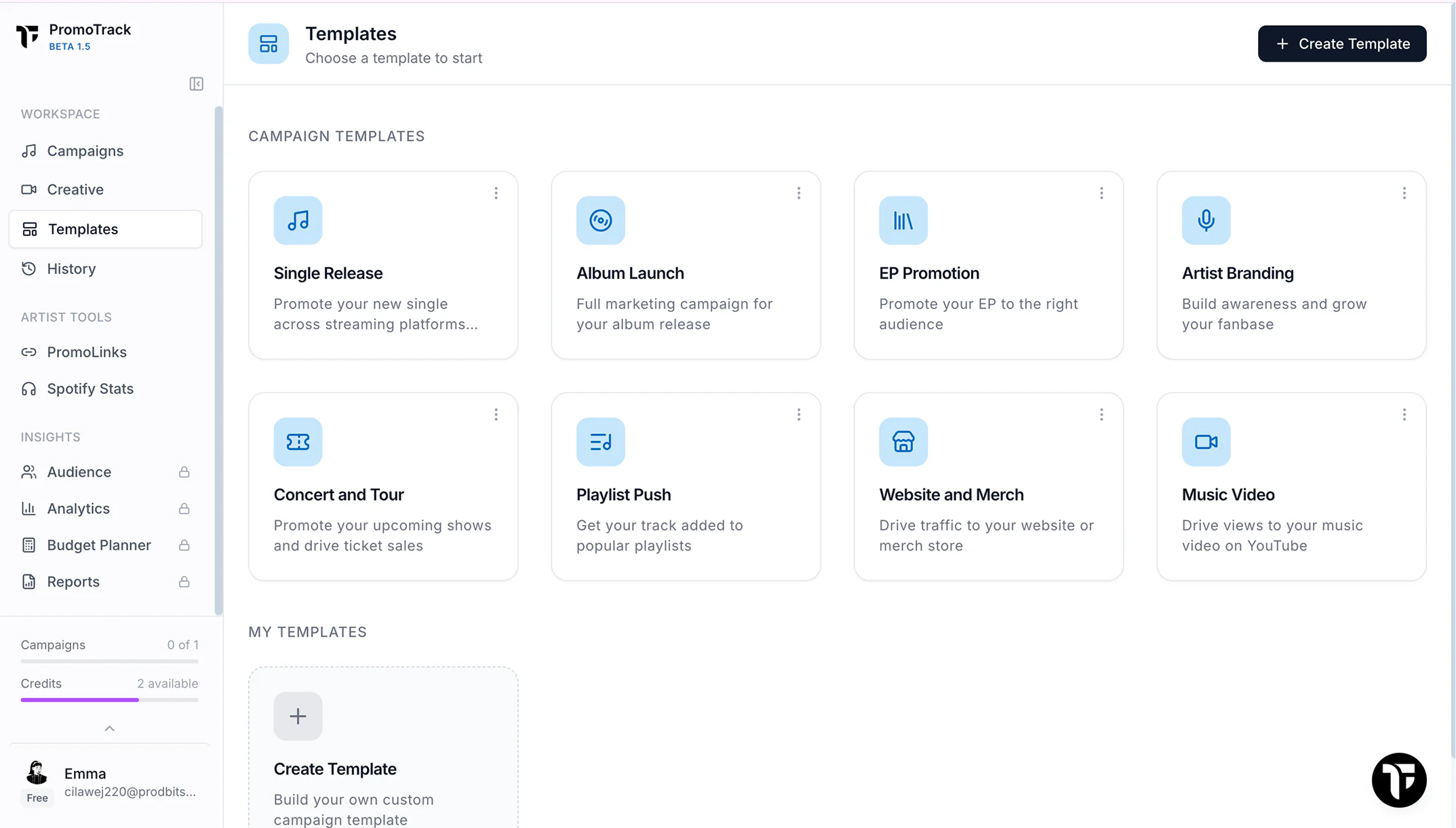
PromoTrack.me is an AI-powered marketing platform for independent musicians — it lets artists build and launch ad campaigns through AI and social media integrations, no marketing background required. Facebook is live today, with more platforms on the roadmap.
The client is a repeat Synterra partner — he comes to us across several of his products when he needs engineering support turning a working concept into something production-ready. He came to Synterra with a vibe-coded build of PromoTrack: the core idea worked, but Facebook campaigns weren't being created correctly, and the interface wasn't stable enough to put in front of real musicians.
What Was the Client's Request for Collaboration?
The app already worked in principle — artists could put together a campaign through the platform. But under the hood, it wasn't holding up yet.
The client's ask was direct: get the Facebook integration working correctly, polish the interface, and make the product stable enough to put in front of real musicians. As he put it, he wanted the system to be "200% stable."
What Was the Client's Bigger Business Goal?
Build a subscription product where independent musicians pay to promote themselves — no marketing background required. That's the pitch: instead of learning Facebook Ads Manager or hiring someone who does, an artist describes their goal and the platform runs the campaign for them.
That promise only holds up if the campaigns actually deliver. Musicians pay to get results — a campaign that reaches the right audience and runs the way it's supposed to. For a product built on "we handle this so you don't have to," that reliability isn't optional. It's the whole offer.
At What Stage Was the Client's Project?
What the client had:
- A working build — PromoTrack could generate campaigns and connect to Facebook
- A clear, specific ask: get the Facebook integration working correctly
- A product built solo with AI tools, with no dedicated engineering team behind it
What was missing:
- A Facebook integration that wasn't reliable
- Verification across the rest of the platform — other features looked functional but hadn't actually been tested, and the client didn't yet know how many of them worked
- A stable, polished interface ready to put in front of real musicians
What Was the Expected Outcome?
- Facebook campaigns created correctly, with parameters passed through as intended
- A platform tested end to end — not just the features the client flagged, but everything
- A polished, stable interface
- The product ready to launch to real musicians
How Was the Result Measured?
Technical validation:
- Facebook campaigns verified to create correctly, with parameters passed through as intended
- Features across the platform tested end to end, not just the ones the client originally flagged
- Interface reviewed alongside that testing, feature by feature, and fixed where it wasn't holding up
- Confirmation that fixed features actually worked as intended, not just appeared to
The product hasn't launched yet, so no adoption or revenue metrics exist to benchmark against — success here was defined by getting the product ready for real users.
How Did the Collaboration Work?
Communication ran through WhatsApp for day-to-day questions, with Jira tracking the work. The engagement ran about a month, working daily with the client to keep things moving toward a product ready for real musicians.
Challenges
The Facebook Ads API had a lot of poorly documented options
Several of the API's configuration options weren't clearly explained in Facebook's own documentation, making it hard to tell which settings were actually needed to get campaigns created correctly.
Solution: Worked through the options individually, testing each one against real campaign creation until the integration reliably passed the right parameters through.
The scope of what wasn't working wasn't clear at the start
The client had flagged the Facebook integration as the issue, but other parts of the platform hadn't been verified either — some worked, some didn't, and there was no way to know which without checking.
Solution: Tested the platform feature by feature instead of only the flagged issue, catching problems the client didn't know were there.
Achievements
How Did We Add Value Beyond Delivery?
The client's ask was specific: fix the Facebook integration, polish the interface. But a product built quickly with AI tools rarely has just one problem — so the team didn't stop at the flagged issue, going through the platform feature by feature and surfacing problems the client didn't know existed.
What Was the Result?
Before:
- Facebook campaigns not created correctly — parameters weren't passing through as intended
- Other features across the platform unverified — some worked, some didn't, and the client didn't know which
- Interface unpolished and unstable in places
- Not yet launched — no real users
After:
- Facebook integration working correctly, campaigns created with parameters passed through as intended
- Platform tested feature by feature, with hidden issues found and fixed beyond the original ask
- Interface reviewed and fixed alongside that testing, ready to put in front of real musicians
- Production-ready and cleared for launch
Tech Stack

Next.JS

NestJS

Supabase

RTK Query

Resend

Tailwind
Flow
Diagnose
Went feature by feature — found what didn't work as expected
Fix
Fixed what was broken, polished the interface
Test
Verified every fixed feature actually held up
Ready
Production-ready, cleared for launch
Team

1 Front end

1 Back end

1 QA


