



Team
3 members

Country
USA

Industry
Design Tools
About Project
Who Was the Client?
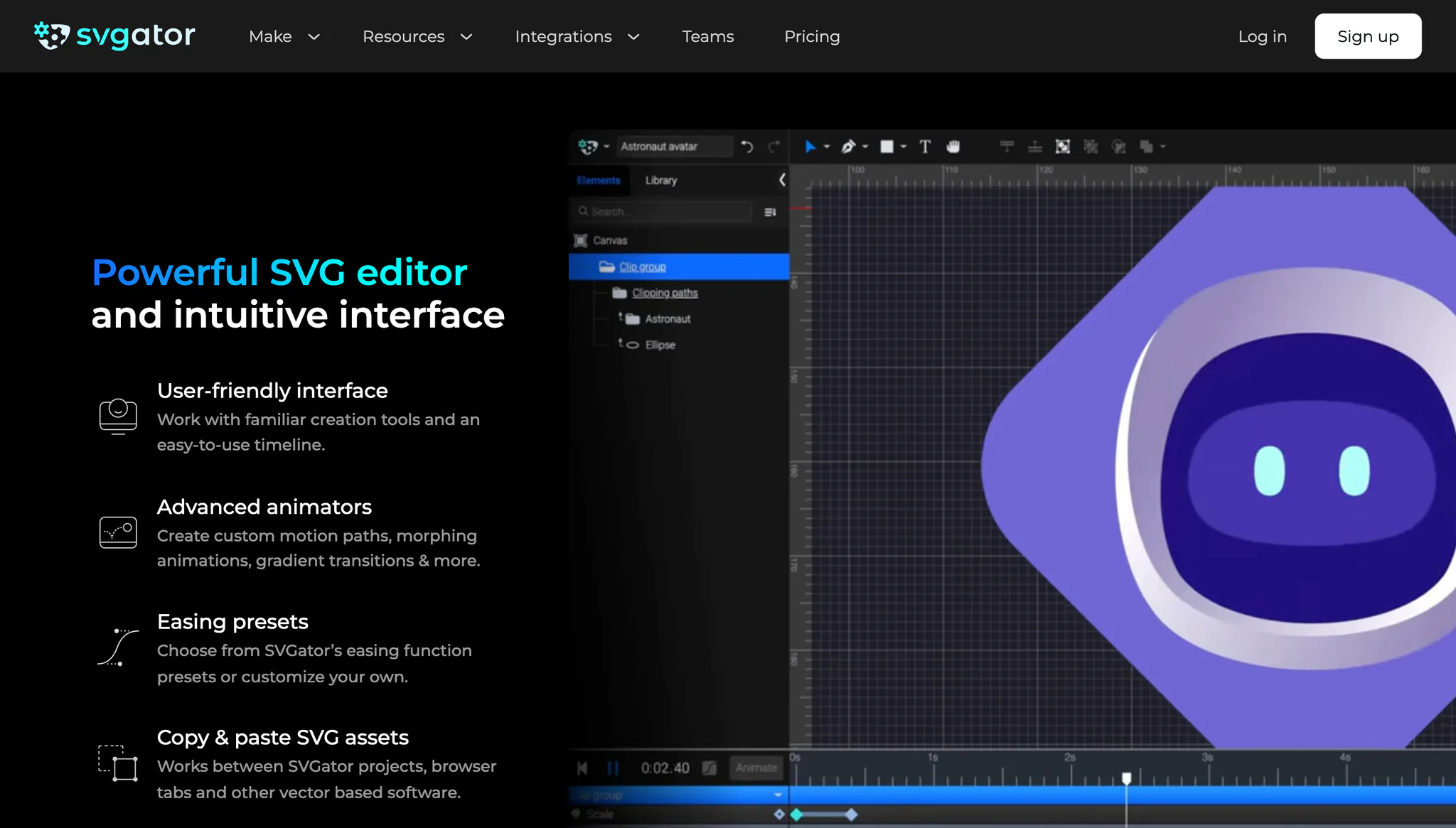
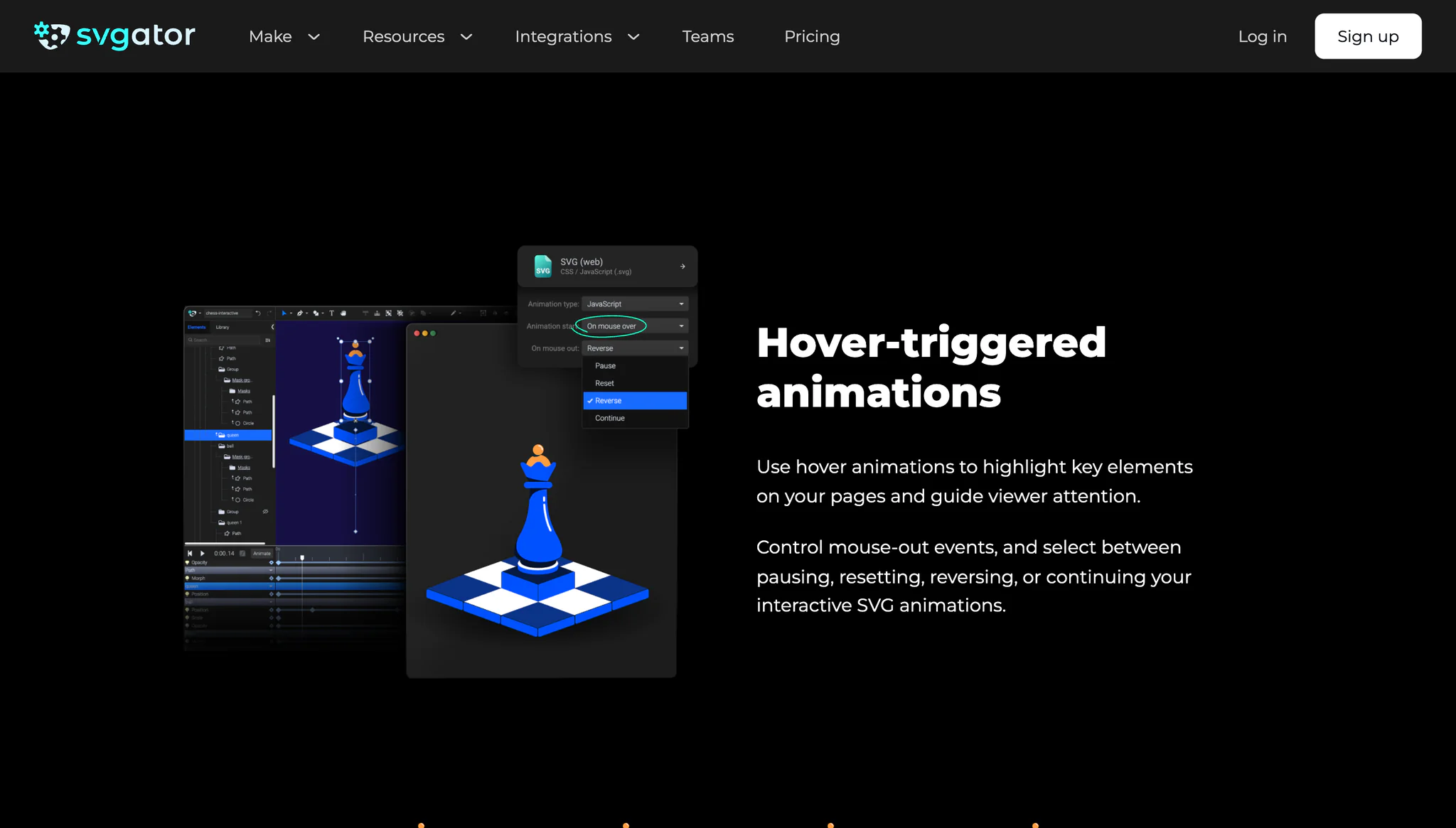
SVGator is a browser-based, no-code animation platform founded in 2017. Product teams, agencies, designers, and developers use it to create production-ready animations — icons, logos, illustrations, loaders, UI elements, and interactive graphics — and export them as SVG, Lottie, GIF, or video, or as code for React Native and Flutter. It has more than 130,000 active users, and teams at Spotify, Canva, Wix, and Webflow build with it.
SVGator brought Synterra in to work on its website — the feature pages, tutorials, pricing, and blog where people first meet the product.
What Was the Client's Request for Collaboration?
Three kinds of work: build new pages, edit existing ones, and update the design of pages already on the site.
The work came with firm constraints. The website runs on React 17. No new libraries could be added — everything had to be built with what was already installed. And every change went through strict code review by SVGator's own team before it shipped.
What Was the Expected Outcome?
- New pages live on svgator.com
- Existing pages edited and brought up to the new designs
- Everything built on React 17 with the libraries already in the project — nothing new added
- Every change accepted by SVGator's code review
How Did the Collaboration Work?
Synterra worked directly in SVGator's website codebase. Each new page, edit, or design update went to SVGator's team for review, and nothing shipped until they approved it.
The engagement covered a defined set of pages and design updates. Once all of them were delivered, the cooperation paused until SVGator's next batch of website work.
Challenges
Strict code review by the client's team
SVGator's engineers reviewed every change against their own standards. Code that worked but didn't fit the codebase wasn't enough — it had to pass their review.
Solution: Followed the conventions already in the codebase instead of bringing our own, so new pages and edits read like the rest of the project.
React 17 and no new libraries
The website runs on React 17, and adding dependencies was off the table. New pages and design updates had to be built with what the project already had.
Solution: Built everything with the libraries already installed. No new packages were added during the engagement.
Achievements
What Was the Result?
Before:
- New pages to build and existing pages to edit and redesign
- A React 17 codebase with a frozen dependency list and strict review on every change
After:
- New pages live, existing pages edited and updated to the new designs
- Built entirely on the existing stack — no new libraries added
- Every change passed SVGator's code review
- All requested work delivered; cooperation paused until the next batch
Tech Stack

React

Gatsby

Sass

Material UI
Flow
Build
New pages, edits, and design updates on React 17 with the existing libraries
Review
Every change through SVGator's strict code review
Deliver
Requested scope live; cooperation paused until the next round
Team

2 Front end

1 QA


